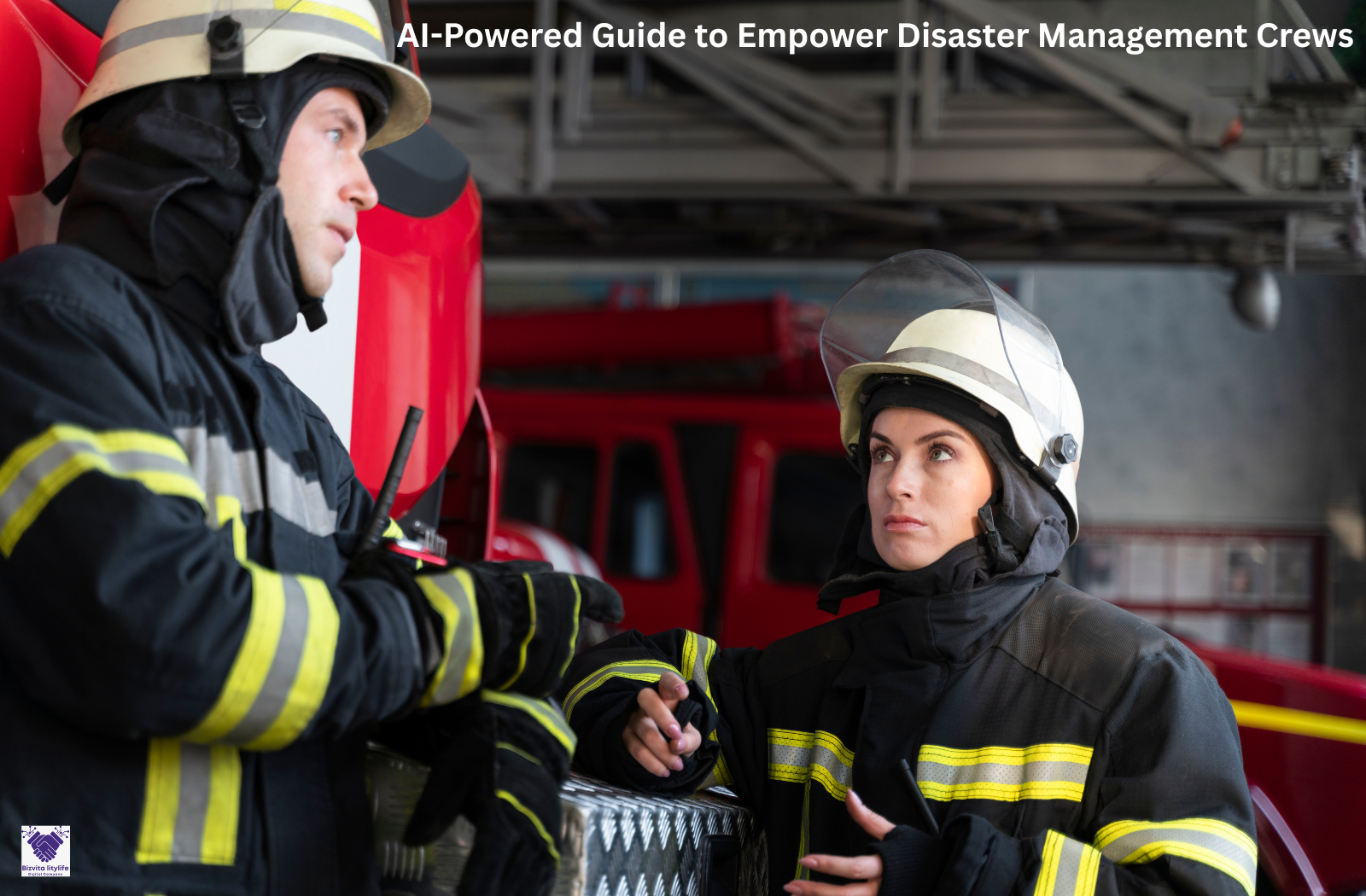

A new blueprint for strengthening emergency response teams
Sirens fade. Dust settles. Yet long after headlines disappear, disaster crews keep working. They clear roads, search collapsed homes, restore power, and comfort families who have lost almost everything. Behind each rescue lies split-second judgment, physical strain, and emotional weight that rarely shows up in reports. As climate change intensifies storms and cities grow denser, response teams face ever-heavier demands each year. That raises a serious question: how can we empower the disaster management crew in ways that protect both lives and responders?
This guide exists to answer that question with clarity and honesty. It explores what modern disaster response truly requires in 2026 and beyond. It explains how smart systems, predictive tools, and human-centered planning can reduce chaos before it spreads. Readers will discover practical steps to build stronger coordination, improve field safety, and support mental health. In addition, this guide breaks down how intelligent technology fits into emergency operations without replacing human judgment.
Throughout the sections ahead, expect grounded insights rather than hype. The focus remains on real improvements such as faster resource deployment, stronger communication networks, and clearer decision-making under stress. By the end, leaders and policymakers will gain a framework they can apply immediately. Because when the next crisis strikes, preparation must already be in place.
What makes modern disaster response more complex than ever
Disaster response used to rely heavily on manual coordination and radio updates. However, rising urban density and extreme weather patterns have multiplied the number of variables teams must track at once. Flood levels change by the hour. Wildfires shift direction without warning. Infrastructure systems are deeply interconnected, so one failure often triggers another. As a result, crews must process more data in less time while under intense pressure.
At the same time, staffing shortages add strain. Experienced responders retire, while recruits require extensive training. Furthermore, burnout rates continue to rise because prolonged exposure to trauma wears people down. Communication gaps also slow operations when agencies operate on separate systems. When technology platforms fail to connect, critical updates can be delayed. That delay can cost lives.
Recent reporting from the Federal Emergency Management Agency disaster portal shows that dozens of major disaster declarations are active across multiple states at any given time. The public dashboard lists federally declared incidents, identifies affected counties, and details the types of assistance authorized, including Individual Assistance and Public Assistance programs. This centralized data confirms that disaster events are increasingly widespread and simultaneous, increasing operational strain on response teams nationwide.
Key complexity drivers include:
- Rapid climate shifts are increasing the frequency of large-scale events
- Urban growth is placing more people in high-risk zones
- Aging infrastructure that fails under stress
- Limited cross-agency data sharing
- Mental health fatigue among frontline staff
Therefore, empowering crews today demands more than extra equipment. It requires integrated systems that simplify information flow and reduce cognitive overload.
How AI improves decision speed and field coordination
Decision speed determines survival rates. When responders know where the damage is worst and which roads remain open, they act with confidence. This is where AI plays a powerful role. Advanced models analyze satellite feeds, sensor data, and weather forecasts within seconds. Consequently, teams receive clearer maps and prioritized alerts instead of scattered reports.
Moreover, predictive systems estimate likely impact zones before disaster peaks. That insight allows officials to pre-position supplies and move vulnerable populations earlier. Machine learning tools also detect patterns in past events, which helps planners refine evacuation routes. Instead of reacting unthinkingly, responders operate with informed foresight.
According to the FEMA Hazus risk modeling program, the federal hazard analysis platform uses standardized geographic and demographic data to estimate potential physical damage, economic loss, and population displacement from floods, hurricanes, earthquakes, and tsunamis. Hazus integrates census data, building inventories, and hazard intensity models to produce loss estimates at the local, state, and national levels. These evidence-based projections allow agencies to anticipate resource needs and prioritize high-risk areas before disaster strikes.
Field coordination also improves when dashboards update in real time. Crews can see supply levels, team locations, and risk assessments on a single interface. This reduces repeated radio chatter and confusion.
Practical applications include:
- Automated damage assessment using drone imagery
- Predictive flood modeling for evacuation planning
- Route optimization for emergency vehicles
- Smart triage systems prioritizing medical response
- Live resource tracking across agencies
Because of these tools, decision cycles shrink. As a result, response teams focus more on action and less on sorting data.
Why human-centered training matters as much as technology
Technology alone cannot solve operational strain. Responders must trust and understand the systems they use. If tools feel complex or unreliable, adoption drops quickly. Therefore, training programs must blend scenario simulations with digital literacy. When crews practice with smart dashboards before crises hit, confidence rises.
In addition, leadership must clearly communicate the purpose. If staff believe tools monitor them rather than protect them, morale falls. Transparency about data use builds trust. At the same time, mental health support should stand beside technical upgrades. Fatigue tracking systems can flag when shifts run too long. Early alerts prevent exhaustion-driven errors.
Strong training strategies include:
- Regular simulation drills with integrated tech tools
- Clear data privacy guidelines for all personnel
- Peer support systems for stress management
- Continuous skill refresh programs
- Feedback loops between field teams and planners
Because of this balanced approach, empowerment becomes practical rather than symbolic. Crews feel supported rather than replaced.
How leadership and policy turn tools into lasting impact
Even the best tools fail without policy alignment. Funding must prioritize interoperability between agencies. When fire departments, medical teams, and local authorities share platforms, information flows faster. Therefore, leaders should audit current systems and remove barriers that block collaboration.
Furthermore, long-term success depends on measurable goals. Metrics such as response time, casualty reduction, and staff retention indicate whether improvements are working. Transparent reporting also builds public trust. When communities understand preparedness efforts, cooperation improves during evacuations.
To strengthen policy foundations, leaders should focus on:
- Cross-agency data standards
- Clear accountability frameworks
- Ongoing evaluation of system performance
- Public communication plans
- Sustainable workforce planning
Because governance shapes execution, leadership commitment determines whether technology remains a tool or becomes a transformation driver.
Turning commitment into preparedness
Disaster crews stand at the front line of uncertainty. Their work requires courage, stamina, and split-second clarity. Yet strength alone is not enough. Systems must lighten the load rather than add to it. Smarter forecasting, connected dashboards, and thoughtful training create conditions where responders operate with greater awareness and less chaos. At the same time, mental health safeguards protect those who protect everyone else.
Empowerment is not a one-time investment. It is an ongoing decision to improve coordination, refine strategy, and protect human life from both physical danger and burnout. When planning begins before storms form or tremors strike, outcomes shift dramatically.
If your organization shapes emergency planning, start reviewing your readiness framework today. Evaluate your data systems, assess training programs, and identify one improvement you can implement this quarter. We remain committed to guiding leaders who seek meaningful change. Stronger systems save lives. Prepared teams change outcomes. The time to act is now.